Why the 1956 women-clergy vote matters By Heather Hahn May 4, 2026 | UM News
Key points:
- Seventy years ago, the Methodist Church supported full conference membership for women clergy.
- The decision would have a resounding impact when The United Methodist Church formed in 1968 and in other developments that expanded clergy recognition.
- The setbacks on the way to full clergy rights offer lessons as women’s leadership and voting rights face increasing public pushback today.
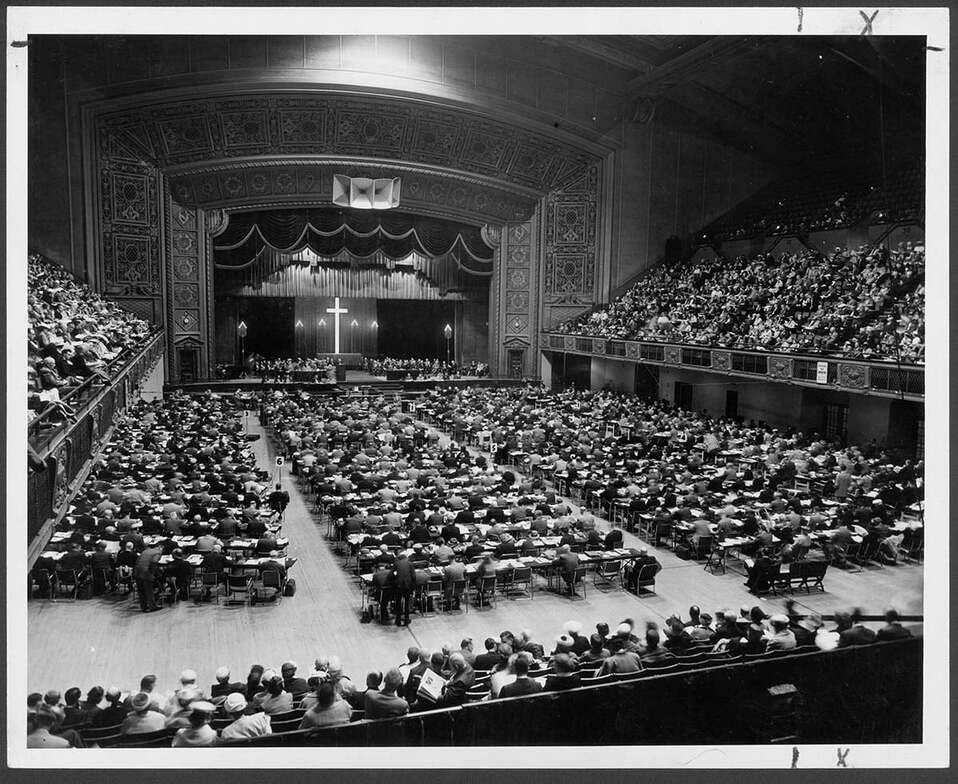
After a debate that lasted part of the morning and all afternoon on the first Friday of General Conference, the Rev. Zach T. Johnson stepped forward to propose substitute legislation that he hoped would break the impasse.
He moved that the lawmaking body add one sentence to the denomination’s Book of Discipline that would make women eligible for Methodist “traveling ministry” under the same church rules that governed men.
“This is a positive approach,” Johnson, a delegate from Wilmore, Kentucky, and president of Asbury College, said in speaking to his proposal.
“And it simply says we are willing to admit any woman who can meet the same conditions that men now meet, to enter any conference. It leaves the matter for the conference to decide … the specific requirements for admission.”
A few moments later, delegates supported Johnson’s substitution by a vote of 389 to 297 — a 56.7% majority. Then, by an overwhelming show of hands, the delegates gave their final approval for the change before adjourning at 5:10 p.m. for a delayed dinner break.
Thus, the Methodist Church’s General Conference, meeting in Minneapolis, granted full clergy rights to women 70 years ago on May 4, 1956.
READ MORE OF THIS ARTICLE HERE